
Understanding 4×3 Door Hinge Sizes: 2.5 mm vs 3.0 mm Thickness

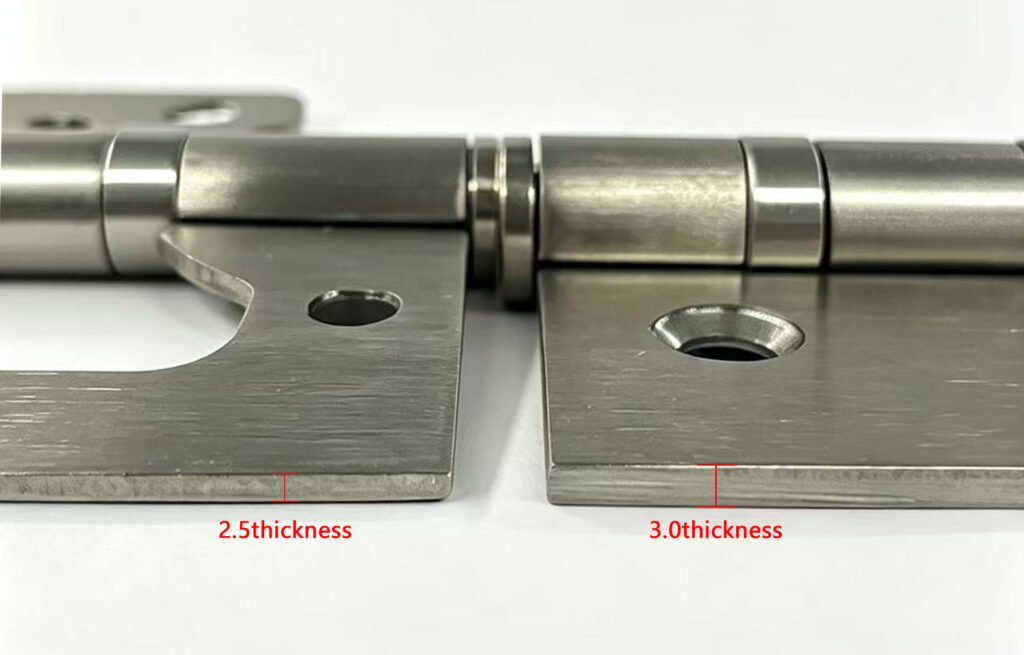
When comparing door hinge sizes, specifications such as 4×3×2.5 mm and 4×3×3.0 mm can look almost identical on a quotation.
The difference appears to be simple: one hinge is 2.5 mm thick and the other is 3.0 mm thick.
In actual sourcing, it is not always that straightforward.
Two suppliers may both quote a 4×3×3.0 mm door hinge, but once you measure the finished hinge leaf, one product may be close to 3.0 mm while another may be thinner.
That does not automatically mean one quotation is wrong. It often means the two suppliers are using slightly different product specifications or naming conventions.
For importers, wholesalers, door manufacturers, and project buyers, this is exactly why the last number on a hinge specification deserves more attention.
Before comparing prices, it is worth confirming what the quoted thickness actually represents.
This guide explains how to read a 4×3 door hinge specification, the difference between nominal thickness and actual thickness, and what buyers should confirm before placing an order.
If you are still comparing hinge types, materials, and general application requirements, our guide on how to choose a door hinge is a useful place to start.
What Does 4×3×2.5 mm Mean on a Door Hinge?
A specification such as 4×3×2.5 mm normally contains three measurements.
| Specification | Meaning |
|---|---|
| 4 in | Hinge height |
| 3 in | Overall width when fully opened |
| 2.5 mm | Specified hinge leaf thickness |
The first number, 4 inches, refers to the vertical height of the hinge.
The second number, 3 inches, refers to the overall width when both hinge leaves are opened flat.
The last number, 2.5 mm, refers to the specified thickness of the hinge leaf.
So:
4×3×2.5 mm
normally means:
4 in high × 3 in wide × 2.5 mm thick
The first two dimensions are usually expressed in inches, while hinge leaf thickness is commonly expressed in millimeters.
That combination is familiar to experienced hardware buyers, but it is still worth writing clearly on an RFQ or purchase order.
A short specification such as “4×3 hinge” may be enough for an initial conversation, but it is not detailed enough for final quotation comparison or production approval.
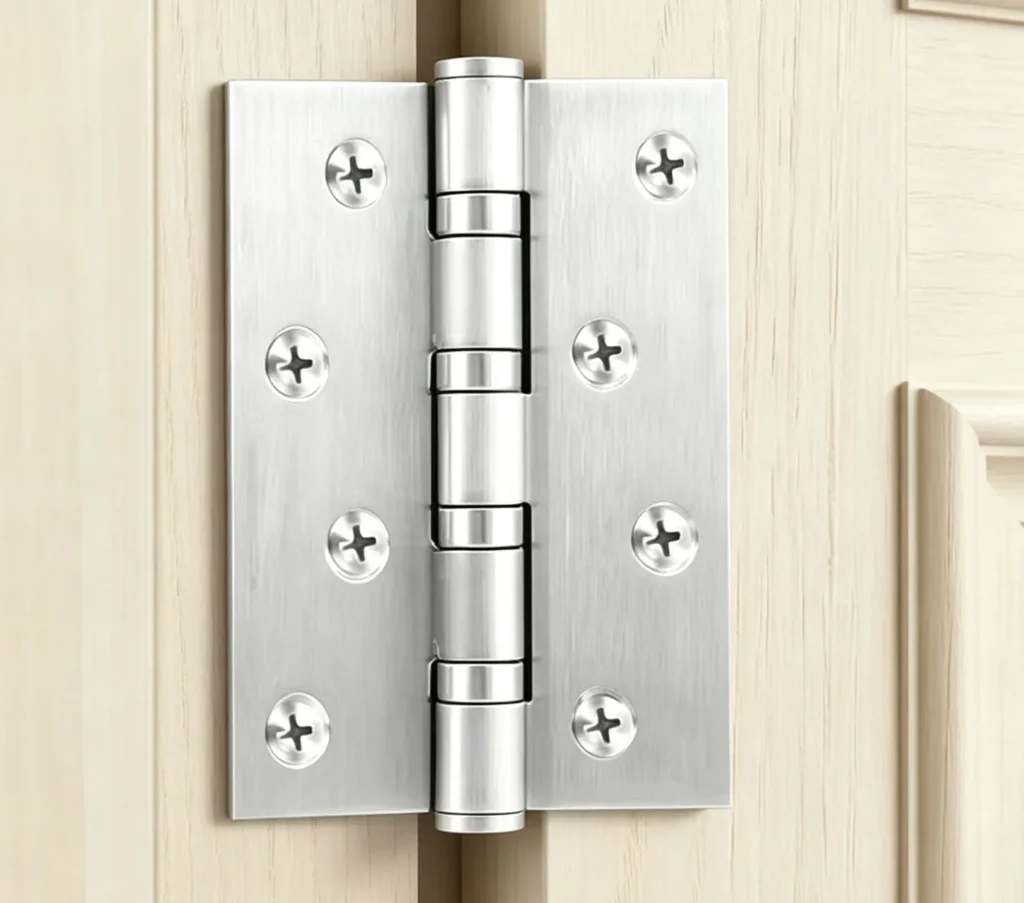
A 4×3 stainless steel butt hinge is a good example of this sizing format. This type of hinge is commonly supplied in different material, thickness, bearing, and surface-finish configurations.
4×3×2.5 mm vs 4×3×3.0 mm: What Is the Difference?
If the height and width remain the same, the main difference between these two specifications is the hinge leaf thickness.
A 4×3×2.5 mm hinge uses a thinner leaf specification than a 4×3×3.0 mm hinge.
The nominal difference is only 0.5 mm, but in a metal hardware product, that difference can influence:
- material consumption
- unit weight
- manufacturing cost
- hinge stiffness
- quotation price
- project specification
There is another important issue.
A hinge commercially described as 3.0 mm may not always measure exactly 3.00 mm after production.
Depending on the supplier and the agreed specification, you may encounter different product configurations.
| Door Hinge Specification | Nominal Thickness | Possible Actual Specification* | What to Confirm |
|---|---|---|---|
| 4×3×2.5 mm | 2.5 mm | Around 2.5 mm | Actual thickness and tolerance |
| 4×3×3.0 mm | 3.0 mm | May be around 2.6 mm in some product configurations | Actual finished leaf thickness |
| 4×3×3.0 mm full-thickness version | 3.0 mm | Around 3.0 mm | Actual thickness and tolerance |
These examples describe possible supplier-specific product configurations. They are not universal industry standards. Terminology, actual thickness, and manufacturing tolerance can vary between manufacturers.
This distinction is important because two quotations can look exactly the same on paper:
304 Stainless Steel
4×3×3.0 mm
Ball Bearing Door Hinge
but still refer to products with different material usage and actual weight.
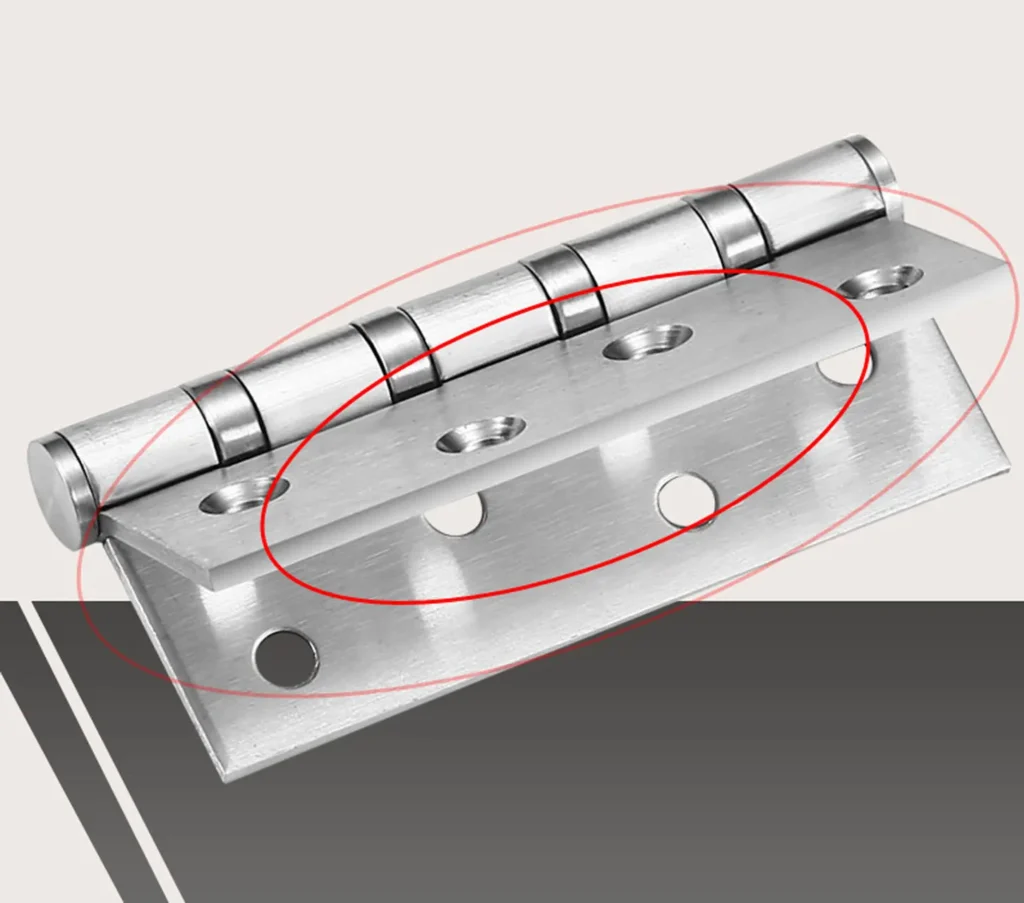
The same principle can apply across different hinge constructions. For example, our stainless steel flush hinge range also includes different size and thickness configurations.
That is why buyers should confirm both hinge type and actual thickness, rather than comparing only the numbers written in the product name.
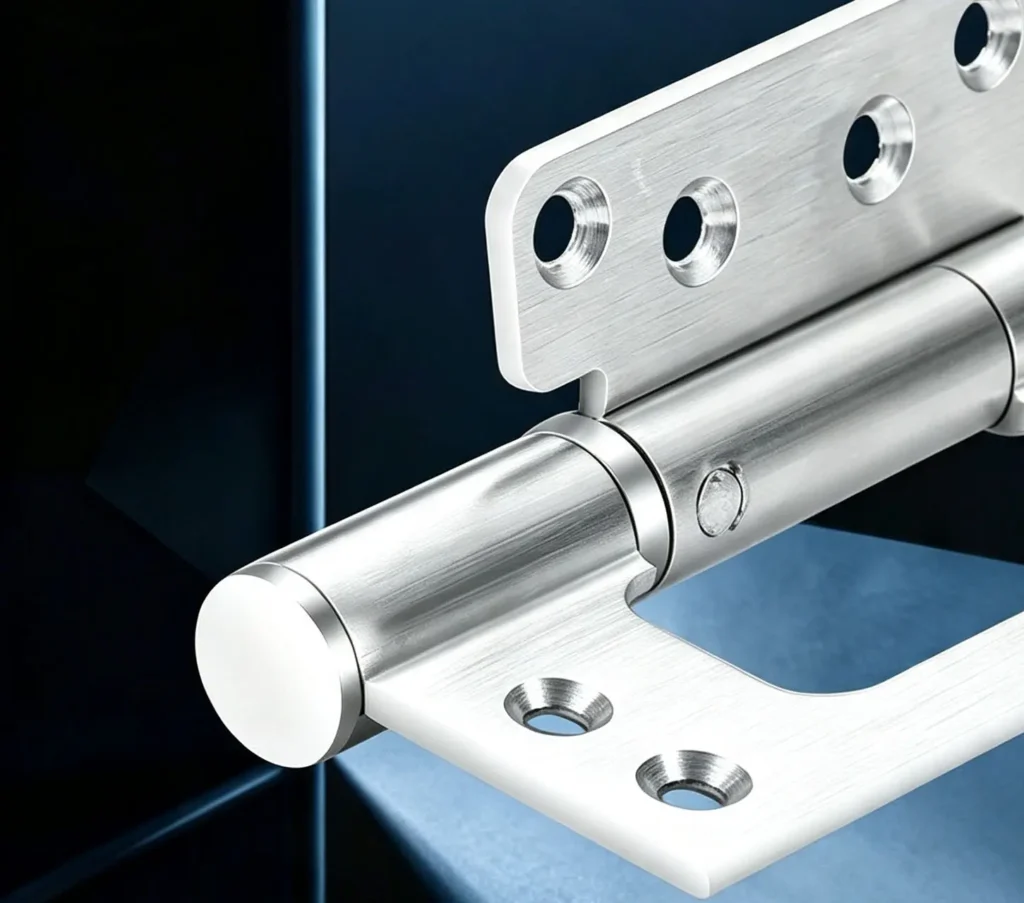
Nominal Thickness vs Actual Thickness
This is probably the most important distinction in this entire discussion.
When comparing door hinges, nominal thickness and actual thickness are not always the same thing.
What Is Nominal Thickness?
Nominal thickness is the thickness used to identify or classify a hinge in a quotation, catalogue, SKU, or product list.
For example:
4×3×3.0 mm
may be used as the commercial description for a particular product configuration.
It tells the buyer which specification is being discussed, but it does not necessarily tell you the exact measurement you will see on a digital caliper.
Production tolerance, raw material specification, stamping, polishing, finishing, and supplier-specific product standards can all affect the finished measurement.
This is why the nominal number should not be the only specification used when thickness is important to the project.
What Is Actual Thickness?
Actual thickness is the physical thickness of the finished hinge leaf.
It is normally checked using a digital caliper or micrometer.
This measurement becomes particularly useful when you are:
- comparing samples from different suppliers
- checking whether two quotations are based on equivalent products
- approving a pre-production sample
- preparing an inspection standard
- checking incoming goods
- investigating a price difference
If actual thickness is important, it is better to state it directly.
For example:
4×3 in butt hinge, actual finished leaf thickness 3.0 mm
is much clearer than:
4×3×3 hinge
Why Can a “3.0 mm” Hinge Measure About 2.6 mm?
This is where quotation discussions can become confusing. A buyer sees 3.0 mm and reasonably expects the finished product to measure 3.0 mm. A supplier may be using 3.0 mm as the commercial specification for a product version whose finished leaf is thinner. Neither side benefits from arguing about terminology after the order has already been placed. The better approach is to remove the ambiguity before quotation approval. Terms such as:- standard
- non-standard
- full thickness
- regular thickness
Why Does Door Hinge Thickness Matter When Comparing Quotations?
Thickness is not the only factor that affects a hinge price, but it is one of the easiest differences to miss. If two hinges have the same height, width, and material grade, a thicker hinge generally uses more raw material. That can affect the weight and production cost of each piece. But buyers should not compare thickness alone. When two 4×3 hinge quotations have different prices, check whether the following details are really the same:- actual leaf thickness
- stainless steel grade
- unit weight
- bearing or washer structure
- hinge pin material
- screw material
- screw dimensions
- surface finish
- polishing quality
- stamping quality
- manufacturing tolerance
- packaging
- inspection requirements
Is a 3.0 mm Door Hinge Always Better Than a 2.5 mm Hinge?
No. A thicker hinge is not automatically the correct choice for every door. The appropriate specification depends on the complete application. Important factors include:- door weight
- door dimensions
- door material
- frame material
- number of hinges installed
- installation method
- opening frequency
- project requirements
- bearing design
- hinge pin
- leaf geometry
- screw fixation
- manufacturing quality
- installation quality
What Should Buyers Confirm Before Ordering 4×3 Door Hinges?
A detailed RFQ makes quotation comparison much easier. Before confirming an order, we recommend checking the following points.1. Hinge Height
Confirm the required hinge height and how it should be measured. For this specification, the nominal height is 4 inches.2. Overall Open Width
Confirm the total hinge width when both leaves are fully opened. For a 4×3 hinge, this is typically 3 inches.3. Nominal Thickness
Record the commercial thickness shown in the quotation, such as: 2.5 mm or: 3.0 mm4. Actual Finished Thickness
If thickness matters to your project, ask for the finished physical measurement.5. Thickness Tolerance
For projects with formal QC requirements, agree on an acceptable tolerance before mass production.6. Material Grade
Do not write only: Stainless Steel if the grade matters. Specify: 201 Stainless Steel or: 304 Stainless Steel7. Bearing Structure
Confirm whether the hinge uses ball bearings, washers, or another internal structure.8. Pin and Screw Material
Do not assume that every component uses the same material as the hinge leaf.9. Surface Finish
Common options can include:- brushed stainless steel
- polished finish
- matte black
- bronze finishes
- customized finishes
10. Packaging
For distributors and importers, packaging can also affect quotation differences. Confirm whether the price includes:- screws
- individual bags
- inner boxes
- labels
- barcodes
- customized packaging
- export cartons