
How to Choose a Door Hinge for Your Project | ShingStar

Learn how to choose a door hinge by comparing hinge types, sizes, thickness, 201 and 304 stainless steel, finishes, and installation requirements.

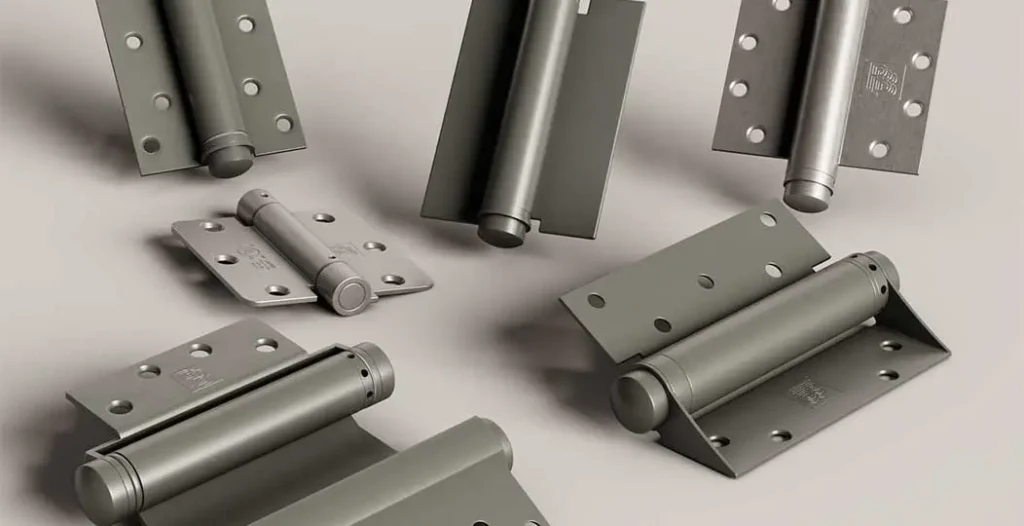
How to choose a door hinge for an interior wooden door
Knowing how to choose a door hinge is important because the hinge supports the weight of the door and affects its alignment, stability, and long-term performance.
 
Handles and locks usually receive more attention because they remain visible after installation. Hinges are smaller and often partly hidden, but they carry the weight of the door every day. They affect how smoothly the door moves, whether it stays properly aligned, and how stable the complete door system feels after long-term use.
 
For a standard residential door, hinge selection may be relatively straightforward. For hotels, apartments, offices, building-material projects, and commercial interiors, the details matter more.
 
A 4 × 3 inch stainless steel hinge, for example, may be supplied as a no-mortise hinge or a traditional butt hinge. It may be made from 201 or 304 stainless steel, while a nominal thickness of 3.0 mm may refer to an actual thickness of approximately 2.6 mm or a full 3.0 mm.
 
Understanding these differences makes it easier to compare products accurately and choose a hinge that suits the door rather than relying only on a photo, product title, or quoted size.

How to Choose a Door Hinge Based on the Door

A practical hinge selection begins with the door itself.

Two doors can have the same height and width but still require different hinge specifications because their weight, construction, installation environment, and frequency of use are different.
Before comparing hinge models, confirm the following information:
  • Door height and width
  • Approximate door weight
  • Door thickness
  • Door and frame material
  • Indoor or outdoor installation
  • Dry, humid, or salt-air environment
  • Expected frequency of use
  • Mortised or surface-mounted installation
  • Required opening angle
  • Number of hinges planned for each door

Door weight

Door weight is one of the most important factors.

A lightweight hollow-core door and a solid wooden door may have similar external dimensions, but they place very different loads on the hinges. Glass panels, decorative boards, locks, handles, and other hardware can also increase the total door weight.
 
The hinge size alone does not tell you whether it can support the complete door.

Frequency of use

A bedroom door in a private home may only open a few times each day. A hotel-room door, office door, or commercial entrance may operate far more frequently.
Repeated use places additional demands on:
  • The hinge leaves
  • The central pin
  • Bearings or washers
  • Screw connections
  • Door and frame fixing points
A suitable hinge should therefore match both the door weight and the expected operating frequency.

Installation method

The installation method also affects which hinge design is suitable.
 
Some projects prefer a no-mortise hinge because it reduces cutting and simplifies installation. Others use a traditional butt hinge installed into prepared recesses in the door and frame.
 
The right choice depends on the door structure, available clearance, frame design, and installer requirements.
 
The important point is not to choose a hinge based only on its overall dimensions. Hinge design, material, actual thickness, fixing method, and application conditions should be considered together.

No-Mortise Hinge vs Butt Hinge

Two common hinge structures for wooden and interior doors are no-mortise hinges and butt hinges.
A no-mortise hinge may also be described as a flush hinge in some markets. In the Chinese hardware industry, it is often called a mother-and-child hinge because the smaller leaf fits into the opening of the larger leaf.
 
A butt hinge uses two complete leaves connected by a central pin.
Both allow the door to open and close, but their structures and installation methods are different.

What is a no-mortise hinge?

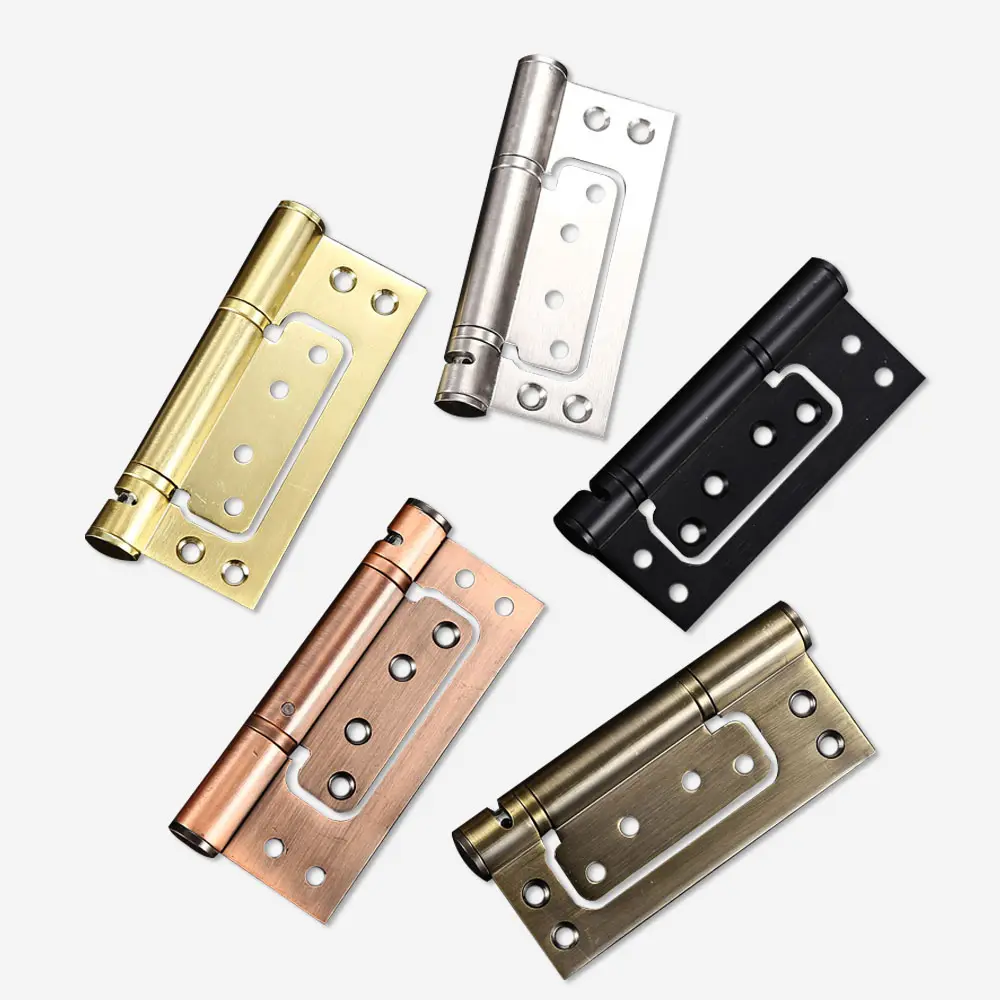
A no-mortise hinge has two interlocking leaves.
 
When the hinge closes, the smaller leaf sits inside the opening of the larger leaf. Because the leaves do not overlap in the same way as a traditional butt hinge, the design can reduce or eliminate the need to cut full hinge recesses into the door and frame.
 
Whether mortising can be avoided completely still depends on:
  • Door clearance
  • Frame construction
  • Hinge thickness
  • Screw position
  • Installation requirements
No-mortise hinges are often used for:
  • Interior wooden doors
  • Apartment doors
  • Residential renovation
  • Replacement doors
  • Lightweight or medium-weight doors
  • Projects requiring faster installation
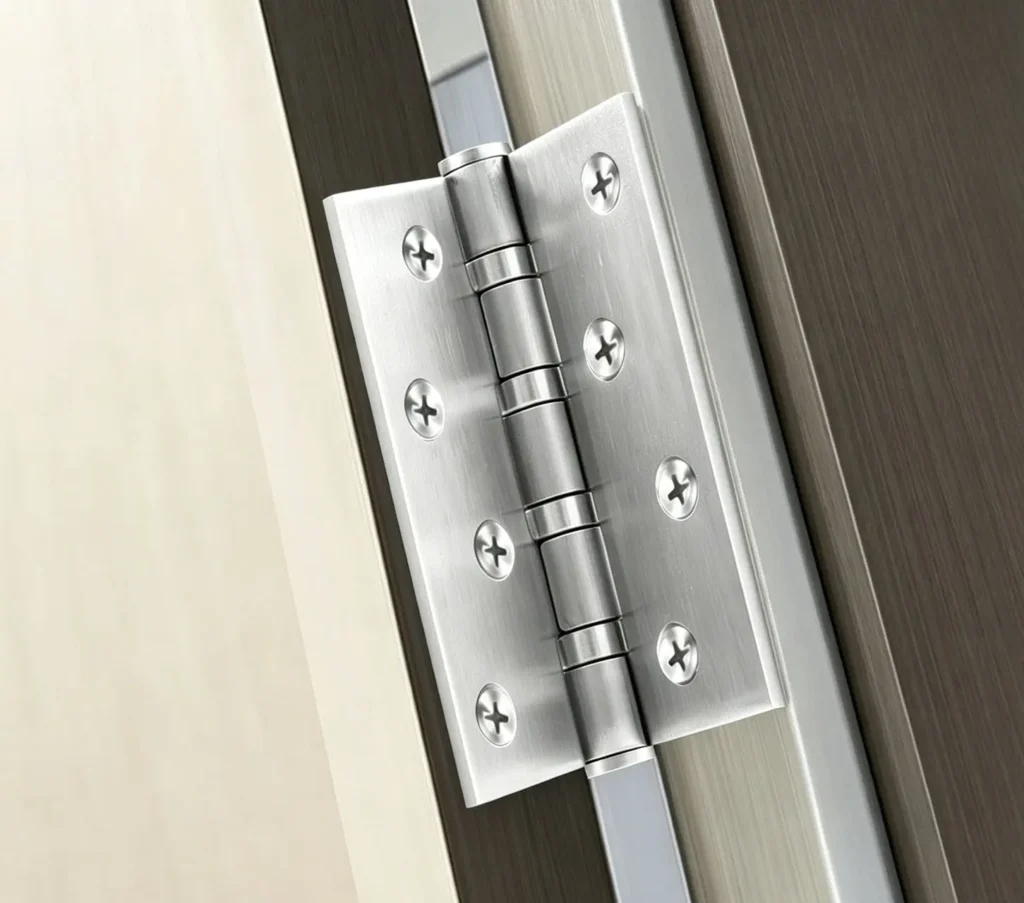
Their main advantage is convenience.
 
Less cutting may be required, which can reduce installation steps and simplify on-site work. This is particularly useful for renovation projects and applications where installation speed matters.
 
However, easier installation does not mean every no-mortise hinge is suitable for every door. For heavier or frequently used doors, the actual hinge thickness, leaf construction, screw fixing, and number of hinges should still be checked carefully.
 
For applications where reduced mortising is preferred, explore our no-mortise door hinges in different materials, thicknesses, and finishes.
 
door hinges
 

What is a butt hinge?

A butt hinge has two complete leaves joined by a central pin.
The leaves are usually installed into prepared recesses in the door and frame. When the recess depth and position are correct, the hinge sits neatly along the edge of the door.
Butt hinges are widely used for:
  • Residential wooden doors
  • Entrance doors
  • Hotel doors
  • Office doors
  • Commercial interior doors
  • Construction projects
  • Renovation projects
Compared with a no-mortise hinge, installation normally requires more preparation.
The installer must control:
  • Recess depth
  • Hinge position
  • Screw-hole alignment
  • Door-to-frame clearance
  • Alignment between multiple hinges
Correct positioning is important because the hinges should share the door load evenly.
For traditional mortised installation, our stainless steel butt hinges are available in different sizes, material grades, thicknesses, and surface finishes.

No-mortise hinge and butt hinge comparison

Feature No-Mortise Hinge Butt Hinge
Leaf structure Interlocking leaves Two complete leaves
Mortising Reduced or sometimes unnecessary Normally required
Installation Generally quicker Requires more preparation
Typical use Interior and renovation doors Residential and commercial doors
Appearance Compact overlapping design Traditional hinge structure
Selection priority Clearance and fixing strength Recess accuracy and alignment
Neither design is automatically better.
A no-mortise hinge may be more convenient when reduced cutting and faster installation are important. A butt hinge may be preferred when the project uses a traditional mortised structure or requires a conventional door-hinge appearance.

Understanding 4 × 3 Door Hinge Sizes and Actual Thickness

A common door hinge specification is:
4 × 3 × 2.5 mm
The dimensions normally mean:
  • 4 inches in hinge height
  • 3 inches in total width when fully open
  • 2.5 mm nominal hinge-leaf thickness
A clearer written description is:
4-inch height × 3-inch open width × 2.5 mm leaf thickness
The first two measurements describe the overall hinge size. The final measurement describes the nominal thickness of the hinge leaf.
This final measurement deserves closer attention because the thickness shown in a quotation or product title may not always match the actual measured thickness.

Current no-mortise hinge specifications

The following options refer to ShingStar’s current product range. Thickness descriptions and manufacturing tolerances may vary between manufacturers.
Product Specification Nominal Thickness Approximate Actual Thickness
4 × 3 × 2.5 mm no-mortise hinge 2.5 mm Approximately 2.5 mm
4 × 3 × 3.0 mm non-standard no-mortise hinge 3.0 mm Approximately 2.6 mm
4 × 3 × 3.0 mm standard no-mortise hinge 3.0 mm Approximately 3.0 mm

Current butt hinge specifications

Product Specification Nominal Thickness Approximate Actual Thickness
4 × 3 × 2.5 mm butt hinge 2.5 mm Approximately 2.5 mm
4 × 3 × 3.0 mm non-standard butt hinge 3.0 mm Approximately 2.6 mm
4 × 3 × 3.0 mm standard butt hinge 3.0 mm Approximately 3.0 mm
The standard and non-standard 3.0 mm versions can look almost identical in product photos.
They may have the same:
  • Overall height
  • Open width
  • Screw-hole pattern
  • Surface finish
  • General appearance
The main difference is the actual leaf thickness.
In our current product range:
  • The non-standard 3.0 mm version measures approximately 2.6 mm
  • The standard 3.0 mm version measures approximately 3.0 mm
The terms “standard” and “non-standard” in this article refer to our current product specifications. They are not universal international thickness standards.
When comparing products from different manufacturers, ask for the actual measured thickness and agreed tolerance rather than relying only on the nominal product name.
Detailed dimensions and finish options are available on our 4 × 3 stainless steel door hinge product page.
Self Closing Door Hinge

Why Similar Door Hinges Can Have Different Prices

It is common to receive several quotations for products described as 4 × 3 × 3.0 mm stainless steel hinges and find that the prices are different.
 
This does not necessarily mean that one supplier is charging more for the same product.
The difference may come from:
  • Actual leaf thickness
  • Stainless steel grade
  • Weight per hinge
  • Pin material
  • Screw material and size
  • Bearing or washer structure
  • Surface-finishing process
  • Dimensional tolerance
  • Inspection requirements
  • Packaging specifications
  • Order quantity
For example, a nominal 3.0 mm hinge with an actual thickness of approximately 2.6 mm uses less material than a hinge with a full 3.0 mm actual thickness.
 
These two products should not be treated as identical specifications.
 
When the material grade and production quality are otherwise similar, leaf thickness can influence:
  • Product weight
  • Material consumption
  • Leaf stiffness
  • Resistance to deformation
  • Load-supporting performance
This does not mean the thickest hinge is always the right choice.
 
A normal interior bedroom door may not require the same specification as a heavy solid-wood door or a frequently used hotel door. The goal is to match the hinge to the application rather than automatically choosing the heaviest version.
 
When comparing quotations, check:
  • Nominal thickness
  • Actual measured thickness
  • Weight per hinge
  • Stainless steel grade
  • Pin and bearing construction
  • Screw specification
  • Surface finish
  • Dimensional tolerance
  • Packaging method
A technical drawing and an approved physical sample make these points much easier to confirm.
 
One common mistake is comparing products only by their titles. Two hinges may both be listed as 4 × 3 × 3.0 mm stainless steel door hinges, while one is made from 201 stainless steel with an actual thickness of approximately 2.6 mm and the other is made from 304 stainless steel with a full 3.0 mm thickness.
 
The dimensions in the title are only one part of the complete product specification.

Choosing Between 201 and 304 Stainless Steel Hinges

Not every stainless steel hinge is made from the same material grade.

201 and 304 stainless steel can look similar after brushing or polishing, but they do not provide the same corrosion resistance.

The correct choice depends mainly on the installation environment and project requirements.

When 201 Stainless Steel May Be Suitable

201 stainless steel can be a practical option for dry indoor applications when the hinge structure meets the required performance specification.

It is often considered for:

  • Interior bedroom doors
  • Apartment doors
  • Office doors
  • Dry residential environments
  • Interior renovation projects
  • Cost-sensitive applications

For a normal indoor wooden door that is not regularly exposed to moisture, 201 stainless steel may provide a suitable balance of appearance, function, and cost.

It can also be supplied with a brushed stainless steel finish to coordinate with modern door handles, locks, and door stops.

However, 201 stainless steel generally has lower corrosion resistance than 304 stainless steel. It is better suited to dry indoor environments than to locations exposed to frequent moisture, salt air, or aggressive cleaning chemicals.

When 304 Stainless Steel Is a Better Choice

304 stainless steel is generally preferred when the environment is more humid or the project requires better corrosion resistance.

It is commonly considered for:

  • Bathrooms
  • Kitchens
  • Hotels
  • Commercial buildings
  • Humid indoor spaces
  • Frequently cleaned areas
  • Some sheltered exterior applications

For example, a door installed near a bathroom or regularly exposed to cleaning and moisture will normally benefit from 304 stainless steel rather than 201.

Outdoor use should still be evaluated according to the actual location.

Coastal areas, swimming-pool environments, salt-spray locations, and polluted industrial sites can be more demanding. These environments may require 316 stainless steel or another corrosion-resistant material.

201 vs 304 Stainless Steel Hinges

Comparison 201 Stainless Steel 304 Stainless Steel
Typical Environment Dry indoor areas Humid indoor and selected exterior areas
Corrosion Resistance Moderate Higher
Common Applications Bedrooms, apartments, and offices Bathrooms, kitchens, and hotels
Cost Generally lower Generally higher
Appearance After Brushing Similar to 304 stainless steel Similar to 201 stainless steel
Coastal Use Generally not preferred May still require 316 stainless steel

It is also important to check more than the hinge leaves.

The pin, bearings, washers, screws, and other components work together as one system. A hinge with 304 stainless steel leaves can still develop corrosion if the remaining components are unsuitable for the installation environment.

Can 201 and 304 Be Identified by Appearance?

Usually not.

After brushing or polishing, the two grades can look very similar. A product photo alone cannot confirm the material grade.

When the material specification is important, use:

  • Product documentation
  • Approved samples
  • Agreed production specifications
  • Material testing when required
  • Pre-shipment inspection

Understanding Brushed Stainless Steel Finishes

Brushed stainless steel is one of the most common finishes for stainless steel door hinges.
It may also be described as:
  • Brushed stainless finish
  • Satin stainless steel
  • Satin finish
  • SSS in some architectural hardware catalogues
These terms are related, but they do not always describe exactly the same texture or gloss level.
The surface is processed to create fine lines running in one direction. This produces a softer, less reflective appearance than a mirror-polished finish.
Brushed stainless steel hinges can be coordinated with:
  • Door handles
  • Door locks
  • Door stops
  • Door closers
  • Other architectural hardware
The exact appearance can vary according to the production process.
One brushed finish may have a fine, soft grain, while another may have a stronger brushing pattern or a slightly brighter appearance.
When reviewing a finish sample, check:
  • Brushing direction
  • Surface texture
  • Gloss level
  • Scratches and stains
  • Edge quality
  • Consistency between both hinge leaves
  • Colour matching with other door hardware
For hotels, apartments, and commercial projects, door hardware is often selected as a complete set.
Small differences between the hinge, handle, lock, and door stop may not be obvious when each product is viewed separately. Once installed on the same door, differences in tone, brightness, and brushing direction can become more noticeable.
To compare matching hinges, handles, locks, and door stops, explore our door hardware collection.

Door Hinge Selection Checklist and Quick Answers

There is no single hinge specification that works for every project.
A practical selection depends on the door, installation method, environment, and expected usage.
For many standard interior doors, a 4 × 3 inch hinge made from 201 stainless steel may be suitable. The final choice may be between a no-mortise hinge for simpler installation and a butt hinge for traditional mortised installation.
For heavier wooden doors, actual thickness becomes more important. A full 3.0 mm hinge contains more material than a nominal 3.0 mm non-standard hinge measuring approximately 2.6 mm.
Thickness alone, however, does not determine the complete performance of the hinge.
Other important details include:
  • Number of hinges
  • Hinge position
  • Screw specification
  • Door-frame material
  • Pin and bearing structure
  • Installation accuracy
  • Frequency of use
  • Door width and centre of gravity

Information to prepare before requesting a quotation

  • Required hinge type
  • Hinge dimensions
  • Nominal thickness
  • Required actual thickness
  • Stainless steel grade
  • Surface finish
  • Door dimensions
  • Approximate door weight
  • Door and frame material
  • Indoor or outdoor installation
  • Expected order quantity
  • Screw requirements
  • Packaging requirements
  • Logo or private-label requirements

Is a no-mortise hinge stronger than a butt hinge?

Not automatically.
Strength depends on the material, actual thickness, leaf structure, pin design, screw fixing, number of hinges, and installation quality. The hinge type alone does not determine load performance.

Is a 3.0 mm hinge always actually 3.0 mm thick?

No.
Some products are sold under a nominal 3.0 mm specification while the actual measured thickness is approximately 2.6 mm. Always confirm the actual thickness and agreed tolerance.

Is 304 stainless steel always required?

No.
201 stainless steel may be suitable for dry indoor doors. 304 is generally a better choice for humid locations or applications requiring improved corrosion resistance.

How many hinges should be installed on one door?

The answer depends on the door height, weight, width, construction, and frequency of use.
Standard interior doors commonly use two or three hinges, while heavy, wide, or extra-tall doors may require additional hinges. The door manufacturer or project engineer should confirm the final arrangement for demanding applications.

Final Thoughts

Choosing the right door hinge is not only about finding a size that fits.
The hinge structure, actual thickness, stainless steel grade, installation method, screw fixing, and surface finish all influence how the product performs after installation.
For a 4 × 3 inch hinge, it is especially important to understand what is being compared. A non-standard 4 × 3 × 3.0 mm hinge with an actual thickness of approximately 2.6 mm is different from a standard version with an actual thickness of approximately 3.0 mm.
Similarly, a 201 stainless steel hinge intended for a dry interior door should not be evaluated in the same way as a 304 stainless steel hinge intended for a humid environment.
ShingStar provides no-mortise hinges, butt hinges, and other door-hardware solutions for distributors, door manufacturers, building-material companies, and project customers.
Visit our door hinge collection to compare available hinge structures, stainless steel grades, thicknesses, sizes, and surface finishes.

2 Comments

Leave a Reply

Your email address will not be published. Required fields are marked *

Product Inquiry